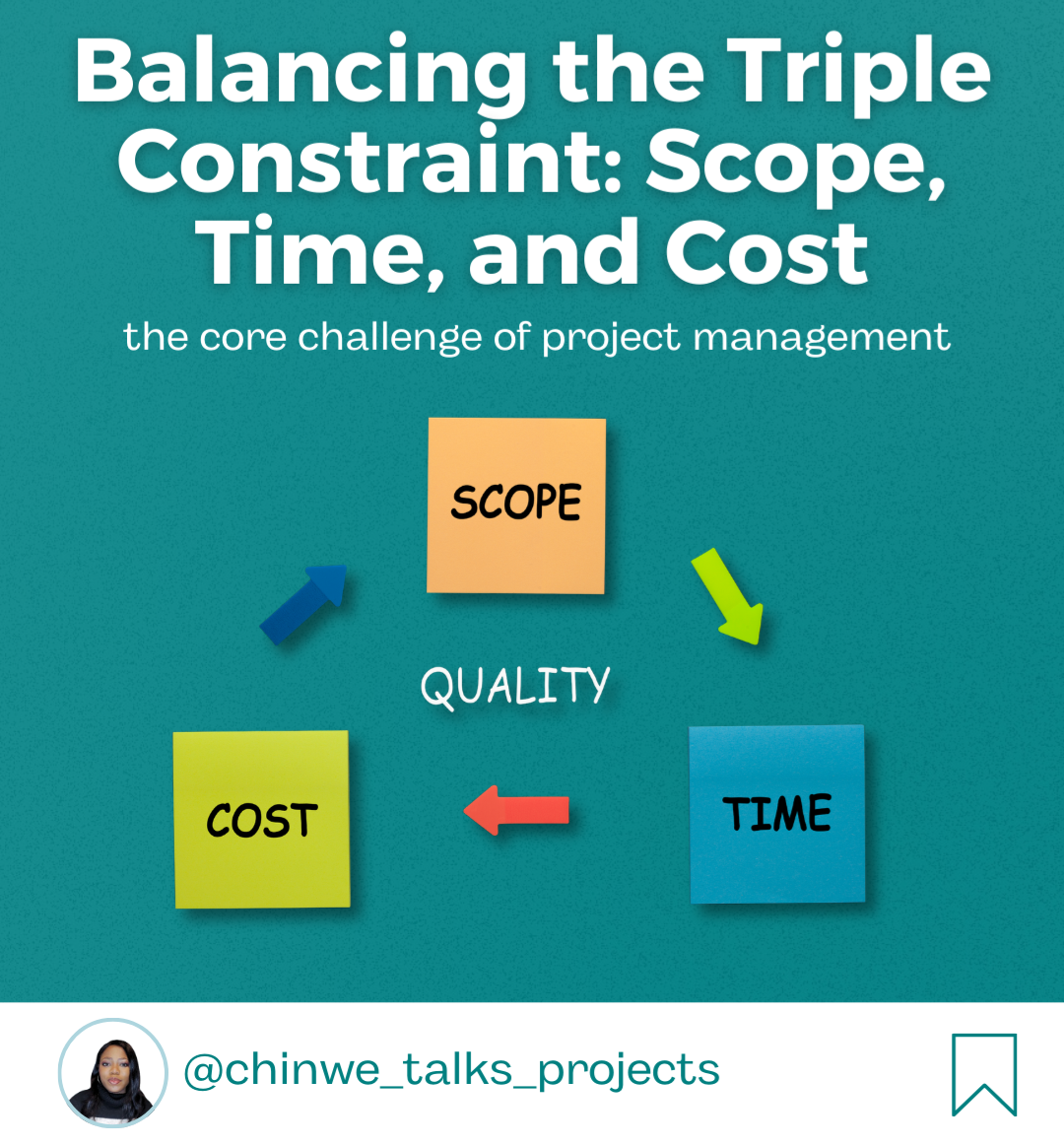
I’m managing a project and occupying the dual role of Project Manager and Business Analyst…yea..yea…I know what you want to say. Blame it on the budget. Frankly speaking, I don’t mind.
Back to my story… I’m working with a team on a mobile app development initiative. We were half way through documenting our user stories and a team member brings up a feature they think should be added to the product. Don’t get me wrong, the idea itself was great, innovative actually. It would have added some element of novelty to the overall product but again as the business analyst on the project, I had to shut it down. Nicely…of course because while the suggestion was innovative, it fell outside the agreed-upon project scope outlined in the business case.
In my role as the PM/BA, I’m tasked with ensuring;
That there is a good return on investment for the project.
That every feature included in the final product speaks to the business objective. If it doesn’t, it has to go.
How Scope Creep Almost Happened
I know how tempting it can be to integrate everything “integratable” into a build because it makes the product look cool. It can be quite enticing to want to include every conceivable feature into a project build—it’s exciting, it feels innovative, and it makes the product look cutting-edge. Adding flashy features or advanced integrations can make the product appear more competitive or sophisticated. However, this temptation often comes at a cost, as it can lead to an overcomplicated product that strays from its core purpose.
The name of that problem is scope creep.
In wanting to look “cool,” a team can easy lose sight of the project’s original objectives. Each addition, no matter how appealing, requires extra time, resources, and effort to implement, often risking delays, budget overruns, and in some cases team burnout. Additionally integrating too many features can overwhelm users and undermine the product’s value proposition.
The excitement for new features can often stem from a lack of clarity about the project’s purpose. The business case explicitly defines the project’s primary goal. However, when team members do not have the opportunity to thoroughly review the business case, this can result in a misalignment of objectives.
The Impact of Allowing Scope Creep
This incident highlighted a key lesson: without consistent communication and a shared understanding of the project scope, well-meaning contributions can spiral into unintended consequences.
Unchecked, scope creep can lead to severe project disruptions. First, it strains resources—financial, human, and time. The introduction of unplanned features often diverts attention from critical tasks, delays milestones, and jeopardizes the project’s delivery timeline. Secondly, it has the potential to negatively affect stakeholders’ confidence in the team, as a project that consistently changes scope risks appearing to be without direction. Finally, it impacts team morale; when priorities shift frequently, team members have a tendency to feel overwhelmed.
Bringing the Team Back on Track
To address the issue, during the meeting, I worked towards refocusing the team on the project’s business case. We reviewed the objectives, deliverables, and the importance of adhering to the defined scope. I emphasized the risks associated with introducing unplanned features and created a shared understanding of our project priorities.
As a PM, here are actionable steps to take if this happens:
Reinforce the Business Caseor Project Charter: Encourage team members to read the business case, if they have not done so.
Establish a Change Management Process: Any new feature suggestion must go through a formal evaluation process to assess its feasibility and impact.
Use a Scope Checklist: Maintain a clear checklist of deliverables, ensuring every task aligns with the original scope.
Communicate Constraints: Ensure team members understand the resources and timelines available to avoid unrealistic expectations.
Encourage Feedback Within Boundaries: While innovation is encouraged (I’m a fan of innovation myself), team members should be reminded to frame ideas within the context of the project’s primary objective.
Bonus Point: While the idea that was proposed may not have been a good fit for the current project, it might just be the money-making foundation for another solution (Hmm…ideas…ideas).
Conclusion
Scope creep can easily disrupt even the most well-planned projects, but proactive communication and firm boundaries can mitigate its risks. As project managers, it’s our responsibility to balance creativity with practicality, ensuring the team’s enthusiasm aligns with the project’s defined objectives.
I am super excited to be back blogging. For a long time I have not really written anything because for the most part, I felt I had nothing to say. I thought to myself, what would you say to the world that someone with access to the internet may not already know or would not be able to find out in a second?
Then this week, I realized I actually do have something to say. Reading through my old posts, I was reminded that I actually had something unique to offer – my perspective.
There is something different we all contribute to making this world an interesting place to be in. This is because our varying experiences with life, our varying social interactions, our varying engagements with clients/product users, our various skills and abilities all contribute to providing us with unique perspectives. However this is not a post about “life”…pardon me.
This is about how perspectives in product development matter. This is why getting multiple inputs from stakeholders, members of the team and most importantly, users, is pertinent.
Asides from the point I raised above, there are a number of reasons why this is critical.
1. The consideration of perspectives drives innovation
Let’s visualize this for a second. Picture the colour wheel, when you mix any two primary colours, you get a secondary colour. When you mix two secondary colours together, you get a tertiary colour, the more colours you introduce, the possibilities in the outcomes become endless.
In case you think that was a poor attempt to make my case, the point is simple…anytime you introduce a new stakeholder, person into the requirements gathering mix, you get a unique perspective. Like the colour wheel generating endless possibilities in colour outcomes, one thing we would find is it that this new colour will fall into a shade of a more dominant, recognizable colour e.g Purple with all it’s variants – lilac, lavender, mauve etc
Image credit: Canva
Before I get carried away again, this is not an art lesson people. If anything any 4 year old’s painting of an apple would probably give mine a run for its money.
My point is when all perspectives are considered, sooner or later, you begin to find the data/information pointing you in a particular direction. At this point I could describe the sort of innovation that has happened here as a melting pot of ideas. This is what I mean when I say the consideration of perspectives drives innovation.
In practice, this is what it could like:
Task: Re-imagine and re-design a work from home desk.
Team composition – 5 members consisting of a designer, a random work from home guru, an engineer, a carpenter and a sales expert
Team member 1 – could come up with a new design for the legs that are collapsible and could fit into a small briefcase
Team member 2 – could suggest it would be great it the desk could be slanted forward or backwards incase they needed to change positions
Team member 3 – May want to look at the solution from a materials perspective. Maybe even integrating a wireless self charge feature on the desk so you don’t have wires flying about
Team member 4 – Has a good idea on what sort of wood could do the job
Team member 5 – The sales guy is already thinking of pitching this new product as a mobile, eco-friendly, desk solutions that helps busy professionals work from anywhere. Has probably come up with a fancy name like “desk in a box” or “Mobile office” etc.
Alas! new product birthed. By the way, if you are reading this and decide to “borrow” and “expand” on this idea, don’t forget to credit me. There’s more where this came from.
2. Integrating perspectives keeps you in the competition
Again, in my humble opinion, a company that maintains a constant channel of open communication with its users is one that would remain competitive and consequently expand its market reach.
Inclusivity is beyond a buzz word. It has the potential to open avenues you never thought possible. Go ask the makeup companies who eventually remembered that black women actually do want their foundation to match their complexion. Some became even more successful when they realized that shades for black people went beyond tan, light, medium and dark.
Any business that makes a deliberate attempt to consider the varying needs of the populace, be it their cultural background, professional background, age ability etc stands a much better chance of attracting a global audience, especially in this digital age. They are able to stay ahead of this curve because there is a constant flow of information from different sources on what the market wants.
Other benefits that can be attributed to incorporating multiple perspectives into product development include;
The reduction or elimination of bias.
Boosting of team morale (if you want to go the HR route)
Finally, improved brand reputation for the company.
Conclusion
To conclude this post on what could have easily been an article about cultural diversity in the work place, If you are looking to build a successful company, “inclusion”, “diversity” are beyond buzz words speaking to race and ethnicity alone. In my opinion, they include the collation of ideas and unique view points, with the aim of creating something extra ordinary. A quick google search will bring up a huge number of products and services that have been deemed successful because they mastered this approach.
So I have shared with you my thoughts on why perspectives matter in product and service development. In my next post, I would either be talking about how to integrate these perspectives in practice or how to convince your boss that requirements gathering is as important a task as writing code. You pick, by letting me know in the comments.
My journey to Kingston University and subsequently, the class on Design Thinking sought to answer one question for me; “how might I help youth owned-startups in Nigeria succeed against the odds they face on a daily basis?” This was important for me because I wanted to build a reputation in startup coaching or business advisory. I realized the first step to doing this was gaining a foundational and theoretical understanding of what a startup is, how they are built and what the keys to their successes are.
I looked forward to taking the module on Design Thinking because according to Ursrey, 2014, design thinking has to be the core of any business strategy or organizational change so as to be able to build a culture on solving problems using this approach.
Introduction to Design Thinking
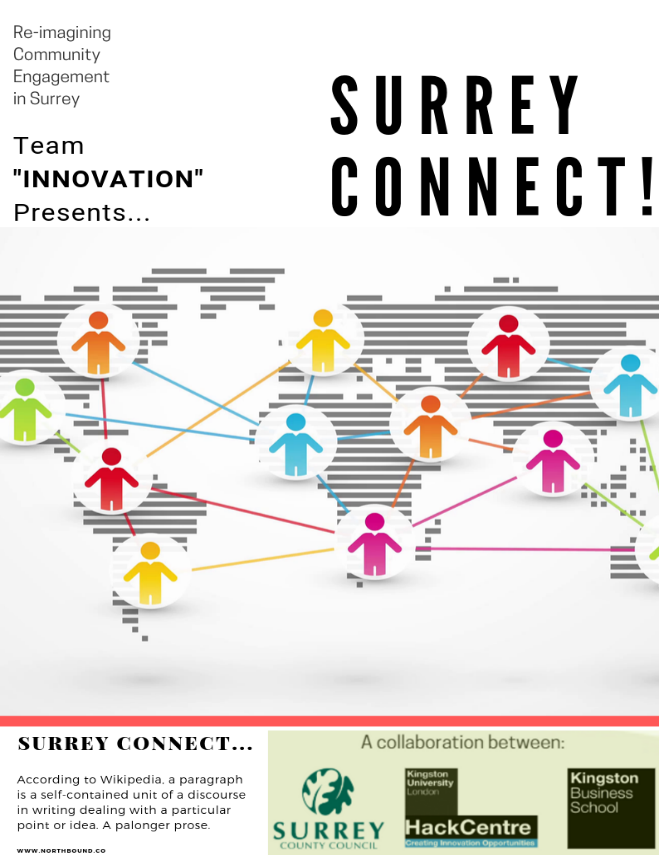
My learning experience began with the startup weekend hackathon. We worked in groups on re-imagining community engagement in Surrey using Design Thinking principles as summarized by Razzouk and Shute, 2012. We engaged in the process of surgically identifying the problem and coming up with a solution by sourcing and understanding information, analyzing it and applying creativity to experiment, rapidly prototype models, gather feedback, and redesign”. The outcome of this process was a product called Surrey Connect!
Figure 1: Product flier for team innovation’s surrey connect
Building Teams
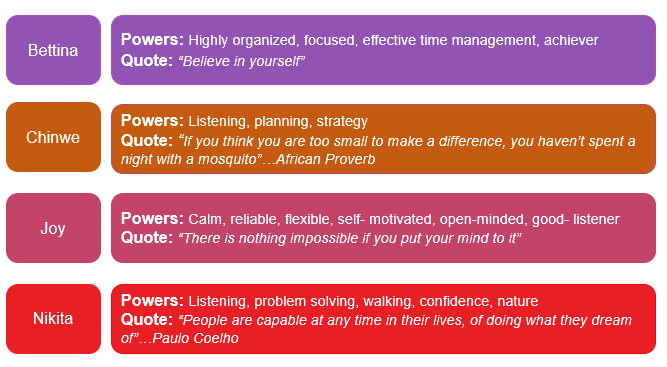
According to De Mol, 2019, “stellar teams have the right combination of hard and soft skills”. In teaming up to set up our real-world business, it was crucial for the team to be heterogeneous and have the right balance of skills, knowledge, and experience (Brenner and Uebernickel, 2016). Understanding our personas was a critical step to identifying and striking a balance in the team as we identified who we wanted to work with. Several materials were introduced to assist us with this process which includes personality tests and the “about me” tool. We also found out about ten different persons that are categorized under learning, building, and organizing and how each of these characters bring value to the team through creativity and innovation – the Ten Faces by Kelley and Littman, 2008.
Figure 2: Team Dt4 members’ individual strengths
Empathy in Design
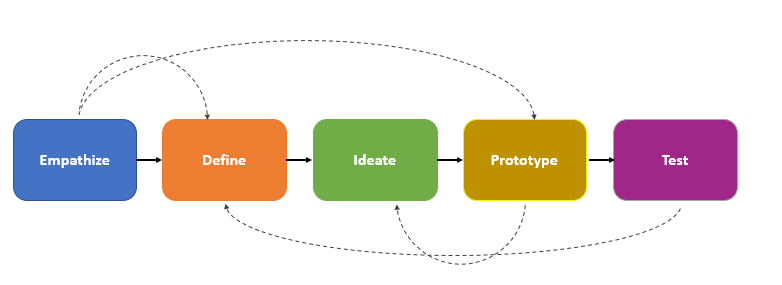
“Empathy, integrative thinking, experimentalism and collaboration” are the various characteristics that design thinkers should have as explained by Brown, 2008. Empathy is also the first stage in the design thinking process, and it helps us, as designers, do away with preconceived notions of and gain insights into the thoughts and values that people hold on to.
Source: Adapted from Interaction-design.org
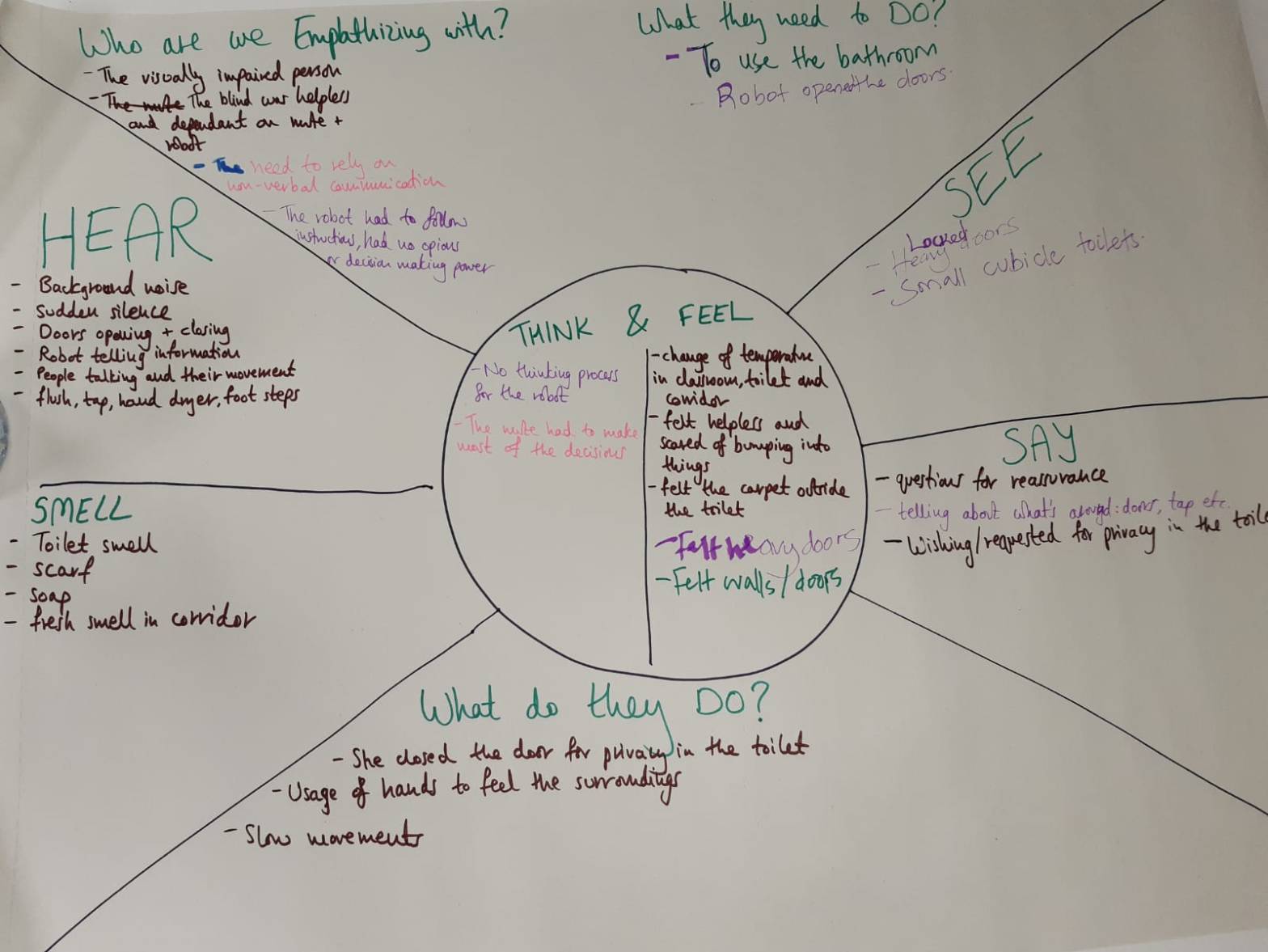
Empathy for target users of any product or service is key to its success. We were shown that a great way to better understand and map out the needs of extreme users was by using the empathy map by Gray, 2017. In trying out the tool in class with a simple toilet-trip experiment, I experienced first-hand, how a “routine” toilet trip (to me) was experienced differently by a visually-impaired person, a mute person and a robot.
As we attempted to solve challenges faced by shoppers with their shopping bags, the empathy map was a helpful tool for understanding why people preferred one bag above the other. This understanding was gotten through observation, direct engagement with users and listening. To deepen our understanding of the problems, we used the 5 Whys technique developed by Toyoda Sakichi Ohno (1993, cited in Brenner and Uebernickel, 2016, p.14), while maintaining a curious and open mindset.
Figure 3: Empathy Map by Team DT4
Design Inspiration
Every good designer draws inspiration from somewhere, something or someone, and to inspire our creative juices, we were given the opportunity to visit the design museum as a team. Our task was to identify three-major designs that stood out to us, identify the setting for it and speak on it. My major takeaway from that trip was that innovation did not necessarily always mean “radical” change; great innovations could also be incremental. The latter relates to doing what we do but better while the former deals with wildly transformational concepts or ideas. To further expand on my learning on this, I read the book- Managing Innovation by Tidd and Bessant, 2015.
This helped us during our ideation process as we developed our second and final product for our business-experience.
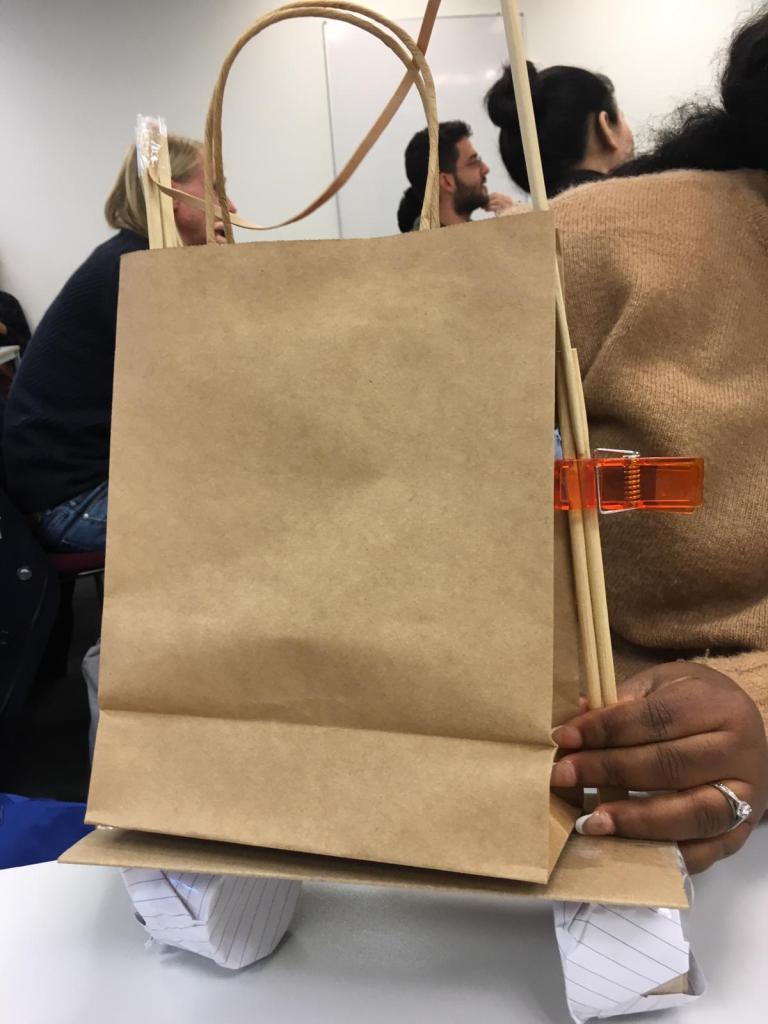
We spent a lot of time, resources and effort developing the prototype of our first idea – a collapsible shopping trolley. We had gone taking dozens of pictures of shoppers’ bags at different malls in the town centre. We had spoken to a lot of people about their experience with their shopping bags; some persons worried about the environmental impact of the bags; some were concerned about the attractiveness while others worried about portability. At the end of the day, we had defined the problem, ideated and developed a prototype. We were saddened to find an almost exact replica of what we had designed on Amazon as we carried out an analysis of existing products.
Figure 4: Prototype of the collapsible shopping bag
It was a good learning point for us as it taught us the importance of failing fast. According to Ries, 2011, the top reasons for startups’ failure are – “the allure of a good plan, a solid strategy and thorough market research”. He opined that because startups face so much uncertainty, the traditional business management processes cannot be applied to them. Ries encourages startups to look at failure as “validated learning”. He went on to define it as “the process of demonstrating empirically that a team has discovered valuable truths about its present and future prospects”. Validated learning helps to prevent “wastage” for startups as resources such as time, funding and skills are relatively scarce.
This approach helped us understand that our current idea was not feasible in its current form. We moved on to identify and attempt to solve a different problem. As we worked on this new problem using the build-measure-learn feedback loop, we were able to quickly move past some stages faster than our previous product because we now knew what went wrong and at what point.
To get validation for a business idea, we learnt that having a minimum viable product was essential as it gives your target customers something tangible to interact with – a visual representation of your idea. By observing how people interact with your product/service, how often they use it, you are able to gain some useful insights on what iterations you need to make.
I believe this approach can be adapted to suit services as well and in the future, I intend to use validated learning to quickly eliminate approaches to delivering entrepreneurship training at scale to young people in remote communities in my country. I will acquire knowledge chunks through research on what training methods could be implemented, test the method with a small group (minimum viable product), come up with key metrics for evaluating the efficacy of that service, gain validated learning through the measurement of internal and external feedback.
Value Proposition Canvas
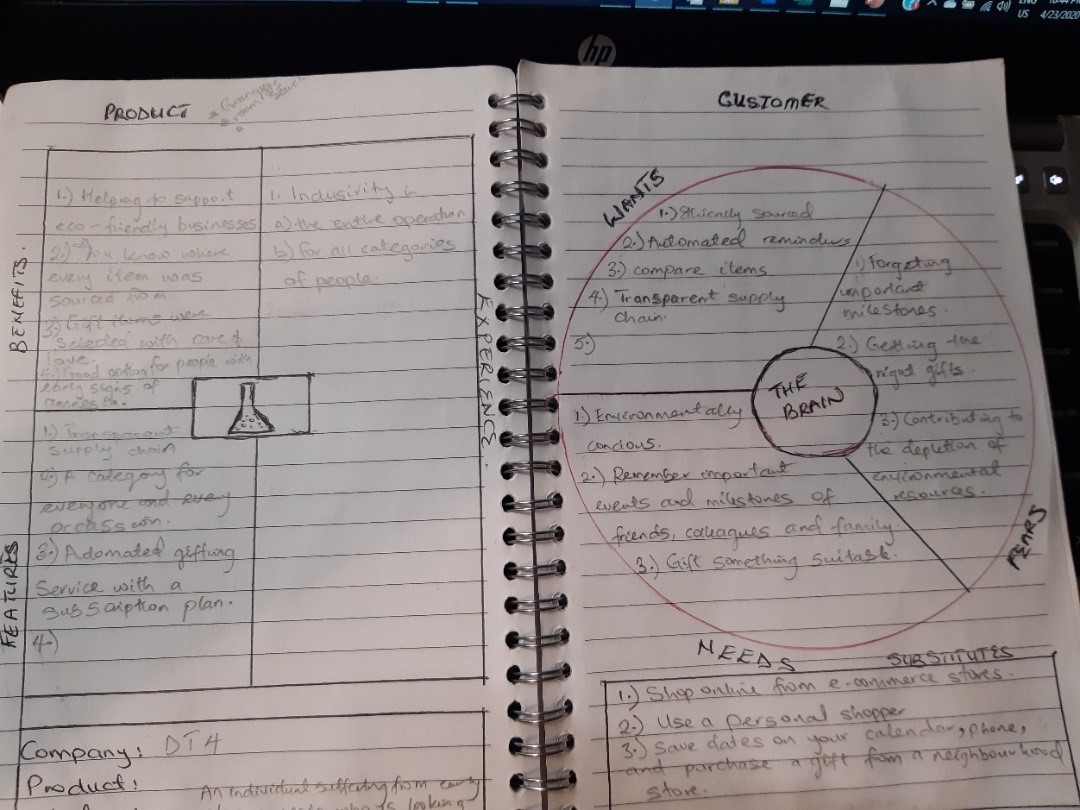
Our experience was completely different when we approached potential customers during our first trade fair and as we engaged with staff and residents of care homes to talk about our products as they were not interested in numbers but rather the value that expected to get from the product. One of the tools that helped us identify the value we were offering was the value proposition canvas (Thompson, 2013).
Customers have problems, desires, needs and wants. To be successful as a business, it is important that you create value for your customer group by addressing those concerns. Prior to this class on value proposition, I had focused more on the novelty of the solution. In developing the value map for your customers, there is a tendency to want to subscribe “pain relievers” for every pain identified in your customer group as we observed in the course of developing our product but Osterwalder et al, 2014, explain that no value proposition can effectively address all the needs and pains. They further explained that the goal of the value mapping was to focus on those needs and pains that mattered the most to the customer and strive to effectively alleviate those pains.
In utilizing the tool to solve the issue of loneliness among the elderly in care homes, we arrived at a 53-week interactive journal that helped to stimulate the recall of happy memories for the elderly. It addressed the needs of social interaction, the fears of isolation.
Figure 5: First version of our value proposition canvas for Journal of Memoirs
Throughout the module, we had opportunities to talk to judges, coaches and business experts about our product. It was a bit intimidating at first because we were not exactly sure of what area of the business would be most focused on. After our first dragon’s den, we realized that the elevator pitch is what determines if people want to hear the rest of what you have to say. The elevator pitch could make or break any opportunity you have, to talk about your business.
One material that helped me understand what I needed to work on is the book “Here’s the Pitch” by Martin Soorjoo. I understood that there was a fine line between making your business idea appear desirable and appearing desperate. The most important thing to do is to state the facts of the problems you are trying to solve and give numbers to support your facts. Janiszewska and Insch, 2012, explain that “brand positioning determines the framework of visual and communication-related execution”. So, in pitching to your investors, you want to be able to clearly articulate your brand position.
As an entrepreneur, it is pertinent to have the numbers for your business at your finger-tips. These include but are not limited to demographic information, market size, pricing, and number of products sold to break-even. For example, we received questions such as “how many people live in care homes” “how many books will you need to sell to break even and at what price?
Our approach to mastering investor pitch:
Understand the problem by applying the techniques on empathy.
Research the industry
Watch pitching videos on youtube
Script the presentation and have everyone practice their lines.
Practice with a timer.
Bonus point – In one of the competitions, we researched the judges to find out what experiences they had in our industry and assigned team members to address questions on specific topics. We won the golden ticket at the Bright Ideas Competition with that approach.
Summary
Team Collaboration: Could we have improved on our product? yes, but as a team, we experienced a lot of challenges on this journey; some of those challenges can be attributed to variance in personality types, differences in opinions, approach to work and scheduling issues. I do not believe that these challenges were only peculiar to our team, however, I do believe that it was our collective responsibility to resolve these issues.
Along the line, we found a way to leverage technology to solve major challenges we had around decision making through an anonymous voting system. Doodle was a useful application for voting on most suitable times, product names and preferred designs as it helped us move speedily on certain key decisions.
Figure 6: Team DT4 celebrating winning the Golden Ticket at the Bright Ideas Finals
Photo credit: Hamza Bajwa
Product Development: Some of the mistakes we made in product development stemmed from trying to appeal to a larger group of people as opposed to appealing to our target demographic. We embarked on a lot of design interations and colour schemes in the process of developing our journal. Looking back at it now, we could have saved our selves a lot of time by doing less “desk-top” research and asking the question – “what does the customer want?”.
Self-Awareness: Prior to this module, I have been quite “traditional” in my approach to businesses. I had previously associated business growth with the addition of offerings, added benefits instead of looking at it through the customers’ lens. I have come to realize that a little imperfection is okay and that not getting it right the first time, is also okay. One of the characteristics of an entrepreneur is the desire to have capacity, so as to act independently (Gasparski et al, 2011 p.14) ; this trait has influenced my work style for the longest time, but I now understand that a variance in the personalities of team members is good for creativity.
References
Brenner, W. and Uebernickel, F. (2016) Design Thinking for Innovation – Research and Practice. Switzerland: Springer International Publishing.
Brenner, W. and Uebernickel, F. (2016) Design Thinking for Innovation: Research and Practice. Illustrated edn. Switzerland: Springer International Publishing.
Janiszewska, K. and Insch, A. (2012) ‘The strategic importance of brand positioning in the place brand concept: elements, structure and application capabilities’, Journal of International Studies, 5(1), pp. 9-19.
Kelley, T. and Littman, J. (2008) The Ten Faces of Innovation: Strategies for Heightening Creativity. Main edn. London: Profile Books.
Osterwalder, A. et al. (2014) Value Proposition Design: How to Create Products and Services Customers Want. illustrated, reprint edn. New Jersey: John Wiley & Sons.
Razzouk, R. and Shute, V. (2012) ‘What Is Design Thinking and Why Is It Important?’, Review of Educational Research, 82(3), pp. 330-348.
Ries, E. (2011) The Lean Startup. Re-print edn. New York: Crown Business.
Soorjoo, M. (2012) Here’s the Pitch: How to Pitch Your Business to Anyone, Get Funded, and Win Clients. New Jersey: John Wiley & Sons.
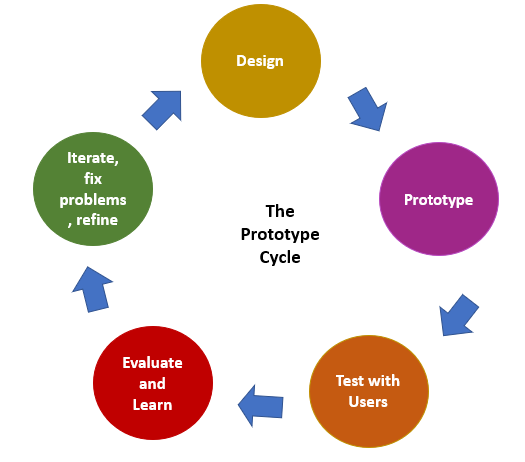
In the course of developing our product, we first had to protype the idea – this is fourth stage in the design thinking process. Prototypes are important as they help the entrepreneur stay lean by helping them “fail cheaply”. It’s also great because as we design, there is the tendency to settle on an idea whereas when your user groups are shown options, they tend to pick something different. Often times, the development process is a complex one, requiring a lot of moving parts but with prototyping, you are able to cut down the process into manageable chunks and then leverage feedback to incrementally improve the product.
This was a new experience for me as I had never had the opportunity to prototype anything but with this business experience, I realized how critical it was to the concept of value creation for the entrepreneur. In designing for the customer, we never get things right on the very first try. In designing our product, we had an idea of what basic “features” we wanted the product to have. For example, we knew we wanted enlarged fonts, graphical illustrations of tasks and we wanted the user to have plenty of space on the journal to fill out the activity sections. However, when we developed the first version, the feedback we got resonated around the illustrations not being “artsy” enough, whereas we thought it looked great.
We had engaged the services of a graphics designer to help design the layout of the journal as well as all the illustrations and as we went through the prototype cycle, we realized that for at every point, we kept going back to the designer to make same changes. These changes were often implemented 2-5 days later, often leading to delays and at our first trade fair, we did not have the protype ready.
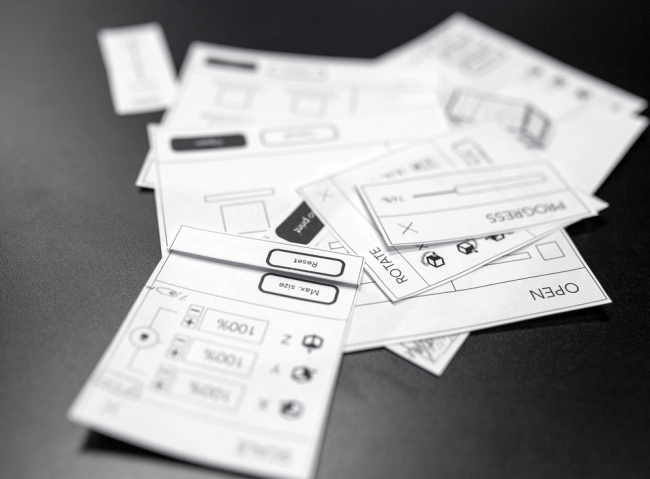
As a team, we suddenly realized that it was okay to not have a finished product right from the start and that failure did not have to be so expensive, neither did the development of a prototype have to be so time consuming. We could have sketched out the pages ourselves using pen and paper quickly so as not to lose some of the insights we gained in the ideation process.
After the sad experience of not having a prototype ready, we resolved to change our approach. Using the Stanford Design Institute process guide for design thinking, we started making prototyping the top three versions of an agreed upon design and showing representatives of our user groups to determine which ones they were drawn to the most. This was a faster and more efficient way of iterating.
The process guide also helped us improve on our testing approach; we moved from telling people what the product was supposed to do, to showing them the product and allowing them come up with what purpose they thought the product was supposed to solve. We asked people to compare this a similar product to see if we our value proposition was clear. It was a very useful strategy as we got a lot of ideas from the users on what the end-product should look like.
Branding is critical in today’s business world whether you run a large company or manage a startup. This is because the world is radically changing and some of the drivers of these change include the internet, globalization , social media and internet of things. The internet is helping make customers, smarter and savvier Globalization on the one hand, is increasing competition as you no longer must deal with those in the local, home environment but also on the international scene. Social media is built around interactive communications, often between two or more people while the internet of things is making our buildings, cars, plumbing smarter through the integration of technology.
What these means is that the entry barriers to running a business is becoming lower and lower. Getting access to global communication is relatively easy and the barriers to reaching customers via communication channels has been significantly lowered. This means you do not have to spend so much money running advertisements on traditional media channels such as television and print newspaper. Even manufacturing has become a lot easier as countries such as China have found a way to make low-cost manufacturing available to business owners. The video by Mauro Porcini provides further insights on this.
Brands have now become the topic of communication and part of the conversation going on online about them relates to their values or feedback about what their customers experienced either with the products or with engagement. In class we were made to understand that people don’t buy products anymore , they much prefer experiences. People make purchase decision based on how they feel and what stories they would become a part of if they were to associate with a brand.
As entrepreneurs, my team and I struggled a bit with the image and values we wanted associated with our brand. I have learned that there is so much content being generated daily – these range from new product launches, to negative stories about celebrities, All these variety of information is competing for the attention of the consumer and so businesses can no rely on the traditional methods for attracting and retaining customers.
What all these means for as an entrepreneur, is that for my business to rise above the noise and succeed, I have to find a smart way to become relevant in the conversations going on and to the people my business is targeting. One of the ways that I can achieve this is by being up-to-date on the latest trends in my industry. Accenture reports an estimate of $1 trillion as the potential revenue that businesses lost to competitors in 2017. So in development of my products and developing my business strategy, I have to ensure that the customers are always at the centre of the design.
According to Mckinsey, one of the ways I can do this is through data-driven insights. Data can help with understanding business trends and investing in the right marketing strategy. For example, when working on the marketing strategy for our journal, we realized that not all social media channels were useful for marketing our products. We did some research, comparing information from Statista and the Passport database and found out that facebook and Instagram were much preferred by our customer group as opposed to twitter or Linkedin. This information was important for us as it not only allowed us to prioritize scarce resources but helped us narrow down what channels we needed to start building relevance in. This was a key takeaway for me.