
Tag: project-management

  • When the Scope Creeps Up On You

    When the Scope Creeps Up On You

    How to Identify and Prevent Project Scope Creep

    Picture this…

    I’m managing a project and occupying the dual role of Project Manager and Business Analyst…yea..yea…I know what you want to say. Blame it on the budget. Frankly speaking, I don’t mind.

    Back to my story… I’m working with a team on a mobile app development initiative. We were half way through documenting our user stories and a team member brings up a feature they think should be added to the product. Don’t get me wrong, the idea itself was great, innovative actually. It would have added some element of novelty to the overall product but again as the business analyst on the project, I had to shut it down. Nicely…of course because while the suggestion was innovative, it fell outside the agreed-upon project scope outlined in the business case.

    In my role as the PM/BA, I’m tasked with ensuring;

    1. That there is a good return on investment for the project.
    2. That every feature included in the final product speaks to the business objective. If it doesn’t, it has to go.

    How Scope Creep Almost Happened

    I know how tempting it can be to integrate everything “integratable” into a build because it makes the product look cool. It can be quite enticing to want to include every conceivable feature into a project build—it’s exciting, it feels innovative, and it makes the product look cutting-edge. Adding flashy features or advanced integrations can make the product appear more competitive or sophisticated. However, this temptation often comes at a cost, as it can lead to an overcomplicated product that strays from its core purpose.

    The name of that problem is scope creep.

    In wanting to look “cool,” a team can easy lose sight of the project’s original objectives. Each addition, no matter how appealing, requires extra time, resources, and effort to implement, often risking delays, budget overruns, and in some cases team burnout. Additionally integrating too many features can overwhelm users and undermine the product’s value proposition.

    The excitement for new features can often stem from a lack of clarity about the project’s purpose. The business case explicitly defines the project’s primary goal. However, when team members do not have the opportunity to thoroughly review the business case, this can result in a misalignment of objectives.

    The Impact of Allowing Scope Creep

    This incident highlighted a key lesson: without consistent communication and a shared understanding of the project scope, well-meaning contributions can spiral into unintended consequences.
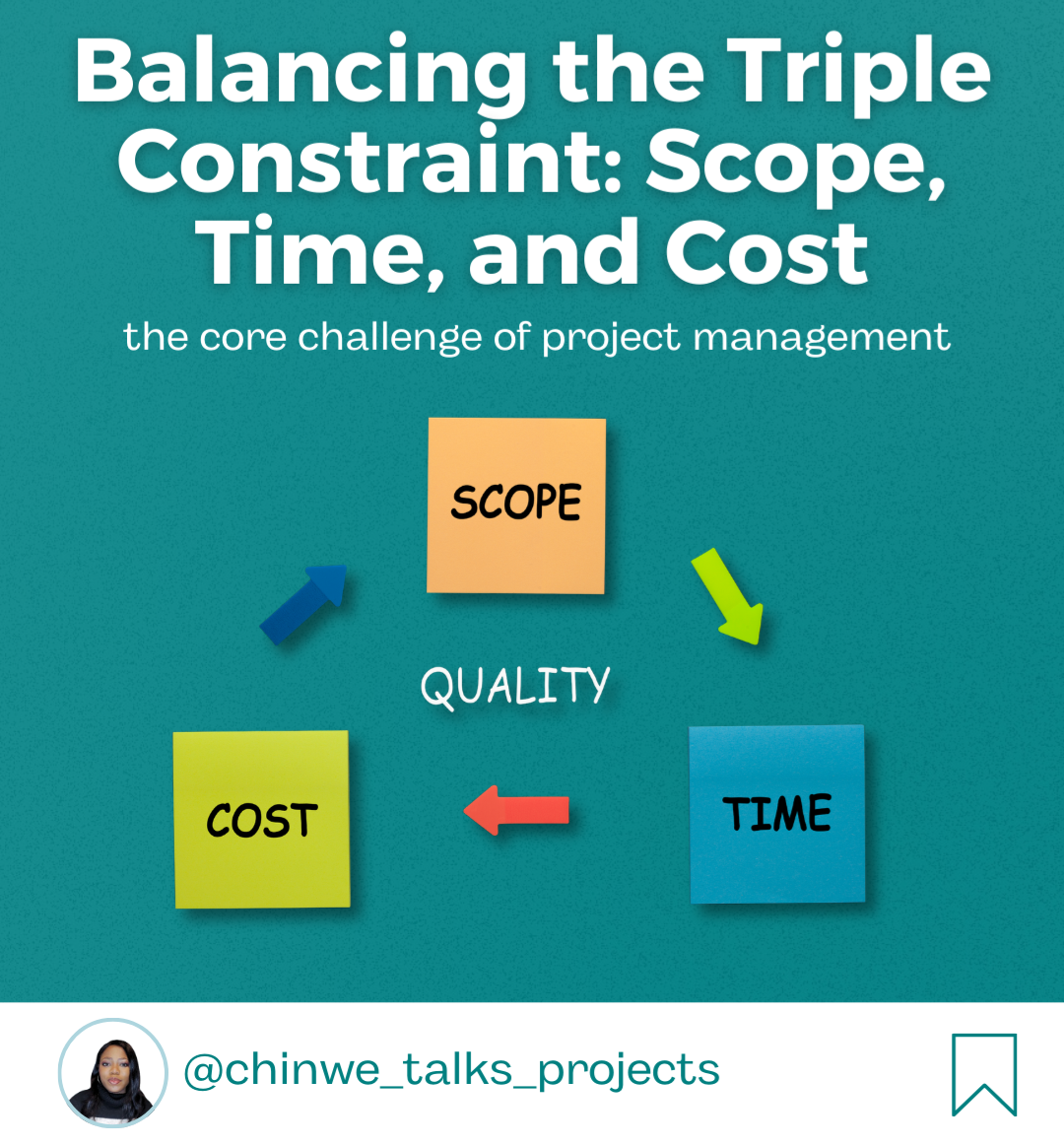
    Unchecked, scope creep can lead to severe project disruptions. First, it strains resources—financial, human, and time. The introduction of unplanned features often diverts attention from critical tasks, delays milestones, and jeopardizes the project’s delivery timeline. Secondly, it has the potential to negatively affect stakeholders’ confidence in the team, as a project that consistently changes scope risks appearing to be without direction. Finally, it impacts team morale; when priorities shift frequently, team members have a tendency to feel overwhelmed.

    Bringing the Team Back on Track

    To address the issue, during the meeting, I worked towards refocusing the team on the project’s business case. We reviewed the objectives, deliverables, and the importance of adhering to the defined scope. I emphasized the risks associated with introducing unplanned features and created a shared understanding of our project priorities.

    As a PM, here are actionable steps to take if this happens:

    1. Reinforce the Business Case or Project Charter: Encourage team members to read the business case, if they have not done so.
    2. Establish a Change Management Process: Any new feature suggestion must go through a formal evaluation process to assess its feasibility and impact.
    3. Use a Scope Checklist: Maintain a clear checklist of deliverables, ensuring every task aligns with the original scope.
    4. Communicate Constraints: Ensure team members understand the resources and timelines available to avoid unrealistic expectations.
    5. Encourage Feedback Within Boundaries: While innovation is encouraged (I’m a fan of innovation myself), team members should be reminded to frame ideas within the context of the project’s primary objective.
    6. Bonus Point: While the idea that was proposed may not have been a good fit for the current project, it might just be the money-making foundation for another solution (Hmm…ideas…ideas).

    Conclusion

    Scope creep can easily disrupt even the most well-planned projects, but proactive communication and firm boundaries can mitigate its risks. As project managers, it’s our responsibility to balance creativity with practicality, ensuring the team’s enthusiasm aligns with the project’s defined objectives.


  • Why Perspectives Matter in Product Development

    Why Perspectives Matter in Product Development

    I am super excited to be back blogging. For a long time I have not really written anything because for the most part, I felt I had nothing to say. I thought to myself, what would you say to the world that someone with access to the internet may not already know or would not be able to find out in a second?

    Then this week, I realized I actually do have something to say. Reading through my old posts, I was reminded that I actually had something unique to offer – my perspective.

    There is something different we all contribute to making this world an interesting place to be in. This is because our varying experiences with life, our varying social interactions, our varying engagements with clients/product users, our various skills and abilities all contribute to providing us with unique perspectives. However this is not a post about “life”…pardon me.

    This is about how perspectives in product development matter. This is why getting multiple inputs from stakeholders, members of the team and most importantly, users, is pertinent.

    Asides from the point I raised above, there are a number of reasons why this is critical.

    1. The consideration of perspectives drives innovation

    Let’s visualize this for a second. Picture the colour wheel, when you mix any two primary colours, you get a secondary colour. When you mix two secondary colours together, you get a tertiary colour, the more colours you introduce, the possibilities in the outcomes become endless.

    In case you think that was a poor attempt to make my case, the point is simple…anytime you introduce a new stakeholder, person into the requirements gathering mix, you get a unique perspective. Like the colour wheel generating endless possibilities in colour outcomes, one thing we would find is it that this new colour will fall into a shade of a more dominant, recognizable colour e.g Purple with all it’s variants – lilac, lavender, mauve etc

    Image credit: Canva

    Before I get carried away again, this is not an art lesson people. If anything any 4 year old’s painting of an apple would probably give mine a run for its money.

    My point is when all perspectives are considered, sooner or later, you begin to find the data/information pointing you in a particular direction. At this point I could describe the sort of innovation that has happened here as a melting pot of ideas. This is what I mean when I say the consideration of perspectives drives innovation.

    In practice, this is what it could like:

    Task: Re-imagine and re-design a work from home desk.

    Team composition – 5 members consisting of a designer, a random work from home guru, an engineer, a carpenter and a sales expert

    • Team member 1 – could come up with a new design for the legs that are collapsible and could fit into a small briefcase
    • Team member 2 – could suggest it would be great it the desk could be slanted forward or backwards incase they needed to change positions
    • Team member 3 – May want to look at the solution from a materials perspective. Maybe even integrating a wireless self charge feature on the desk so you don’t have wires flying about
    • Team member 4 – Has a good idea on what sort of wood could do the job
    • Team member 5 – The sales guy is already thinking of pitching this new product as a mobile, eco-friendly, desk solutions that helps busy professionals work from anywhere. Has probably come up with a fancy name like “desk in a box” or “Mobile office” etc.

    Alas! new product birthed. By the way, if you are reading this and decide to “borrow” and “expand” on this idea, don’t forget to credit me. There’s more where this came from.

    2. Integrating perspectives keeps you in the competition

    Again, in my humble opinion, a company that maintains a constant channel of open communication with its users is one that would remain competitive and consequently expand its market reach.

    Inclusivity is beyond a buzz word. It has the potential to open avenues you never thought possible. Go ask the makeup companies who eventually remembered that black women actually do want their foundation to match their complexion. Some became even more successful when they realized that shades for black people went beyond tan, light, medium and dark.

    Any business that makes a deliberate attempt to consider the varying needs of the populace, be it their cultural background, professional background, age ability etc stands a much better chance of attracting a global audience, especially in this digital age. They are able to stay ahead of this curve because there is a constant flow of information from different sources on what the market wants.

    Other benefits that can be attributed to incorporating multiple perspectives into product development include;

    • The reduction or elimination of bias.
    • Boosting of team morale (if you want to go the HR route)
    • Finally, improved brand reputation for the company.

    Conclusion

    To conclude this post on what could have easily been an article about cultural diversity in the work place, If you are looking to build a successful company, “inclusion”, “diversity” are beyond buzz words speaking to race and ethnicity alone. In my opinion, they include the collation of ideas and unique view points, with the aim of creating something extra ordinary. A quick google search will bring up a huge number of products and services that have been deemed successful because they mastered this approach.

    So I have shared with you my thoughts on why perspectives matter in product and service development. In my next post, I would either be talking about how to integrate these perspectives in practice or how to convince your boss that requirements gathering is as important a task as writing code. You pick, by letting me know in the comments.