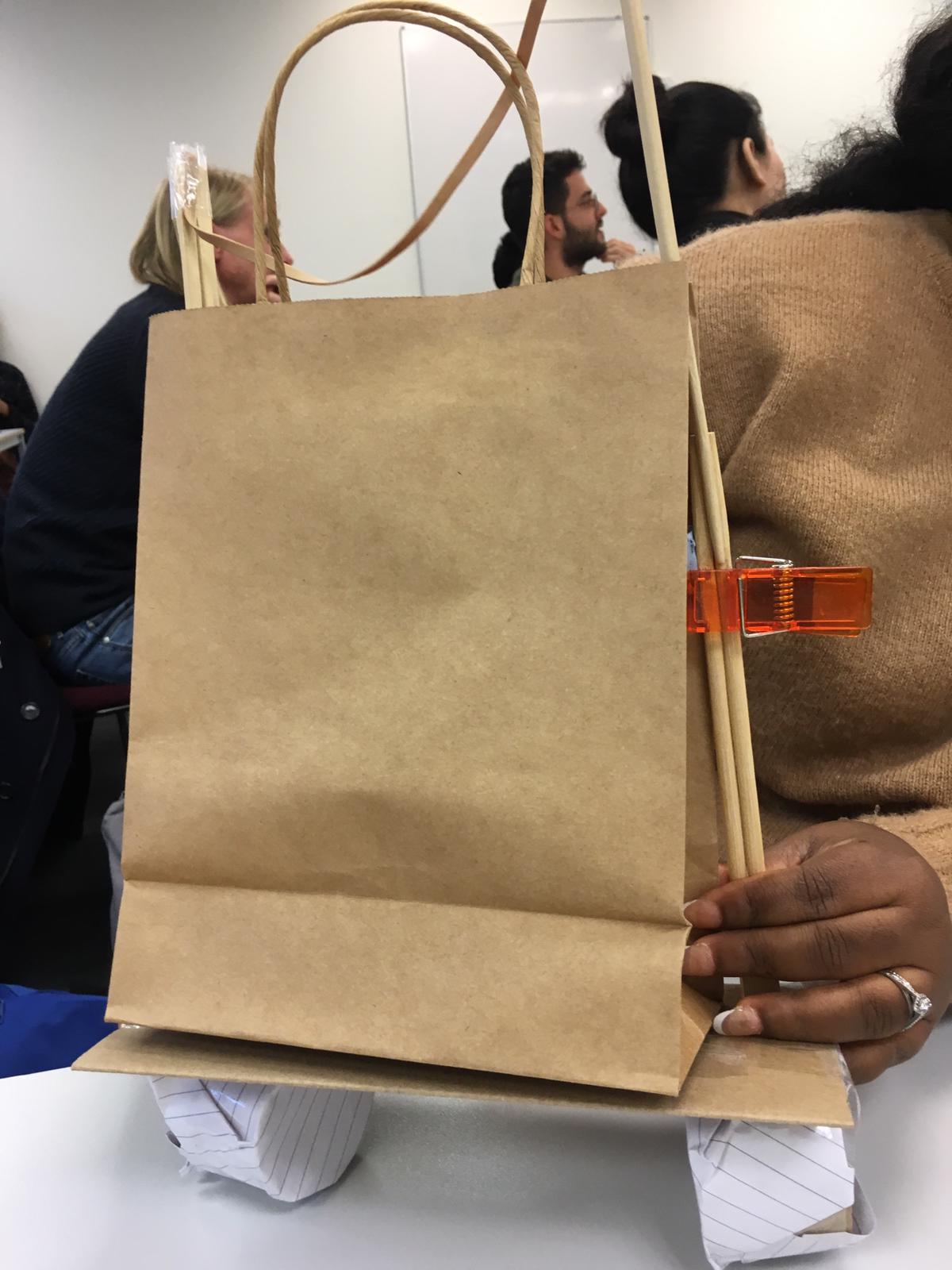
For the past three weeks, my team and I worked on the concept of a portable, retractable/collapsible frame for people who carry heavy bags. The problem came from a personal experience that I and some of my team members experienced; that meant we were on to something right? We were following all the steps of design thinking by first going out to talk to people about what we figured could be a problem in order to better understand how we could come up with a better product.
From asking a lot of people questions about what they love or hate the most about their shopping bags, why they love or hate it, why they preferred certain bags over others and so on. We came to the conclusion that people needed something stylish that hold a lot of items without causing damage to the arms or fingers and we had our idea…a frame that could fit into any bag but could expand and allow you attach multiple bags to it and had collapsible tires so you could roll it along.
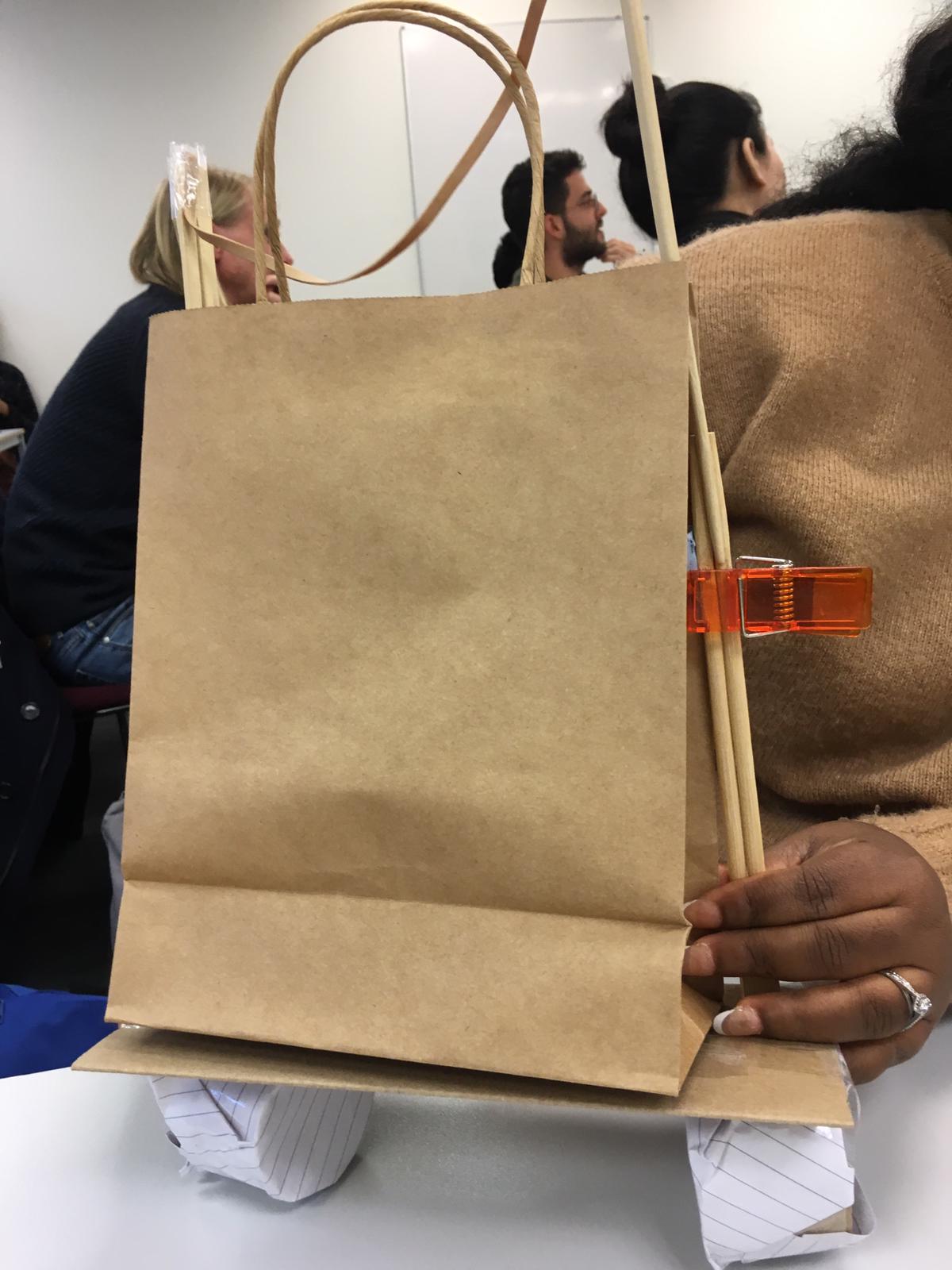
It seemed we had defined the problem and had a great idea at the time; that was until we moved to the next step in the design thinking process – prototyping. We came up with what we felt the end-product should look like and realized it was not just going to work for the following reasons.
- Substitutes were relatively cheaper
- There was a product out there that was quite similar to ours in design.
- It was also possible we had not defined the right problem.
In solving the right problem, there must be establishment of a basic need as well as contextualization of the problem. The justification for our thoughts hinged on the fact that a product that 90% resembled our prototype existed in the market but did not seem to be majorly adopted by the target group we had our eyes set on. We figured if we could answer the question why, we could be on to something but in the meantime, we had to accept the fact that we had failed.
Failure was good for us at this point in time because it meant we did not waste time, effort and resources on a product that was going to fail much later in the future. As a team, we chose not to look a it as failure, it meant we had followed all the necessary steps to develop the product. If we had missed out on conducting market research to see what we were going to be up against we would have been embarrassingly unaware of who or what our competition was.
Failing at this point meant we had time to go back to the drawing board to come up with something – better- a product that was designed to solve the problem of loneliness. We were able to move past prototyping stage faster than our previous product because we now knew what sort of questions to ask, and how we could go about conducting our market research to be able to come up with a product that had a unique value proposition.
Leave a Reply