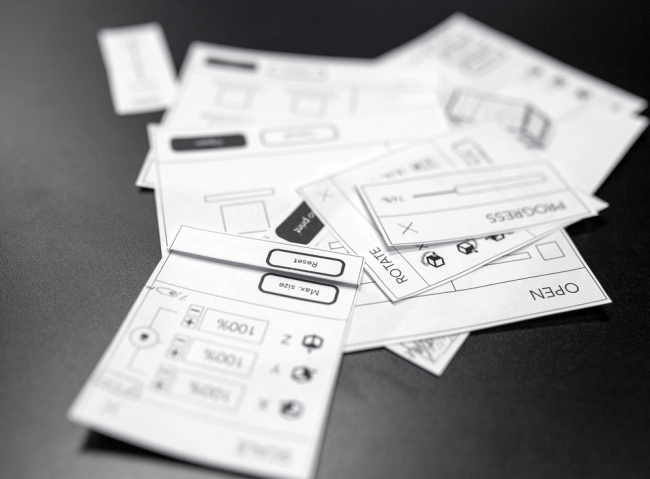
In the course of developing our product, we first had to protype the idea – this is fourth stage in the design thinking process. Prototypes are important as they help the entrepreneur stay lean by helping them “fail cheaply”. It’s also great because as we design, there is the tendency to settle on an idea whereas when your user groups are shown options, they tend to pick something different. Often times, the development process is a complex one, requiring a lot of moving parts but with prototyping, you are able to cut down the process into manageable chunks and then leverage feedback to incrementally improve the product.
This was a new experience for me as I had never had the opportunity to prototype anything but with this business experience, I realized how critical it was to the concept of value creation for the entrepreneur. In designing for the customer, we never get things right on the very first try. In designing our product, we had an idea of what basic “features” we wanted the product to have. For example, we knew we wanted enlarged fonts, graphical illustrations of tasks and we wanted the user to have plenty of space on the journal to fill out the activity sections. However, when we developed the first version, the feedback we got resonated around the illustrations not being “artsy” enough, whereas we thought it looked great.
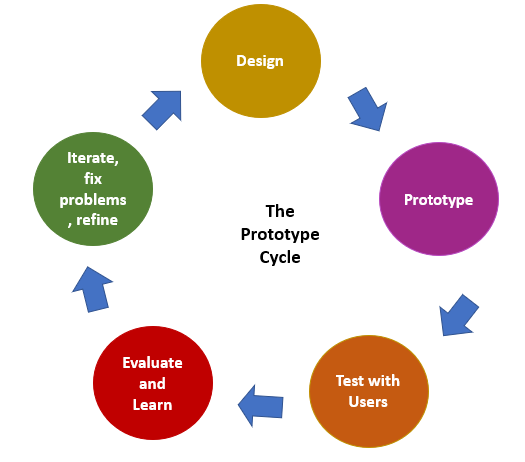
Source: Adapted from interaction-design.org
We had engaged the services of a graphics designer to help design the layout of the journal as well as all the illustrations and as we went through the prototype cycle, we realized that for at every point, we kept going back to the designer to make same changes. These changes were often implemented 2-5 days later, often leading to delays and at our first trade fair, we did not have the protype ready.
As a team, we suddenly realized that it was okay to not have a finished product right from the start and that failure did not have to be so expensive, neither did the development of a prototype have to be so time consuming. We could have sketched out the pages ourselves using pen and paper quickly so as not to lose some of the insights we gained in the ideation process.
After the sad experience of not having a prototype ready, we resolved to change our approach. Using the Stanford Design Institute process guide for design thinking, we started making prototyping the top three versions of an agreed upon design and showing representatives of our user groups to determine which ones they were drawn to the most. This was a faster and more efficient way of iterating.
The process guide also helped us improve on our testing approach; we moved from telling people what the product was supposed to do, to showing them the product and allowing them come up with what purpose they thought the product was supposed to solve. We asked people to compare this a similar product to see if we our value proposition was clear. It was a very useful strategy as we got a lot of ideas from the users on what the end-product should look like.
Leave a Reply