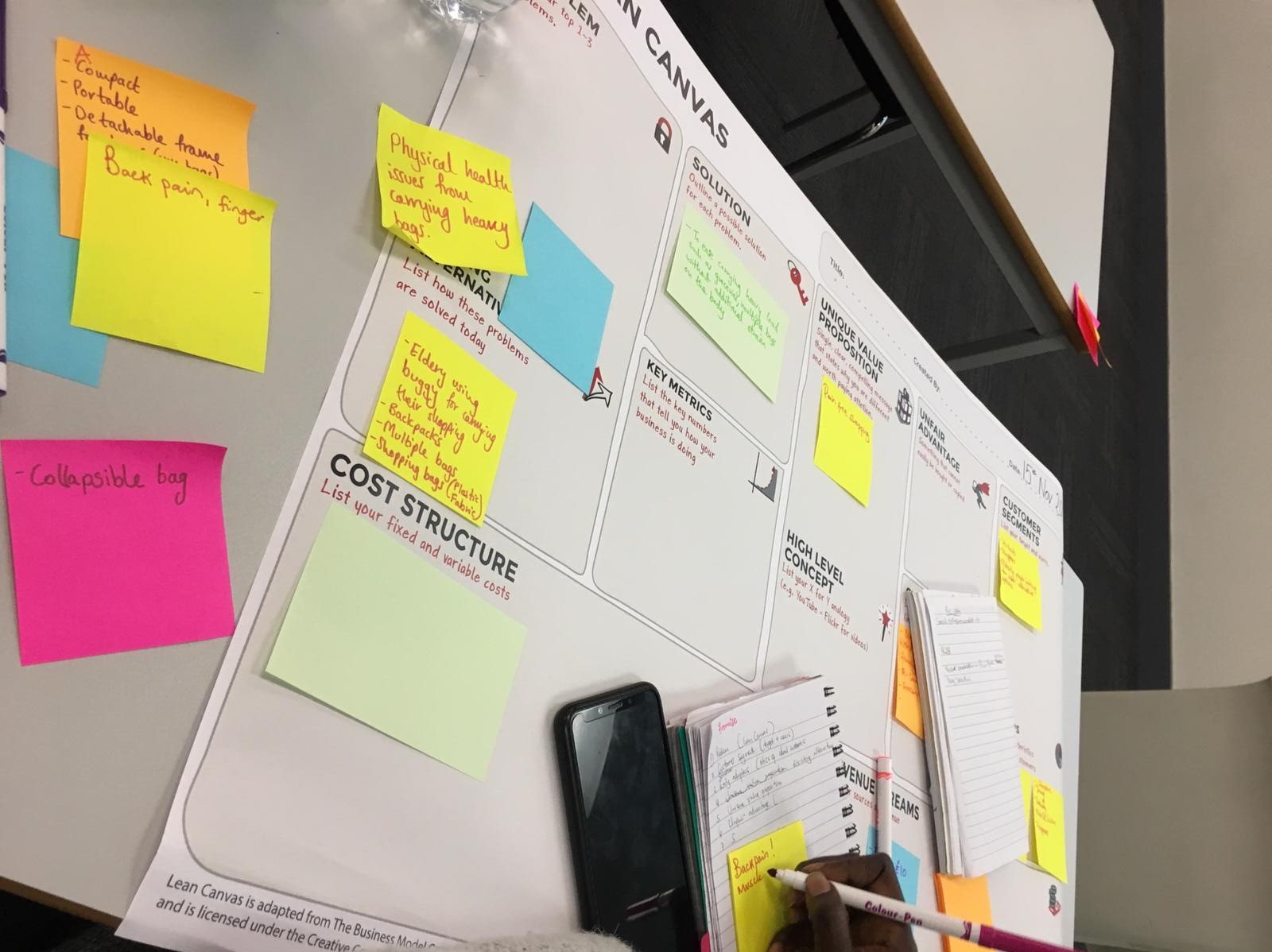
For the longest time I had seen business practioners and colleagues around me use the words “Lean Canvas” and “Business Model Canvas” interchangeably. I am was also guilty of it and may have even influenced other people into doing so erroneously. In this blog post I will attempt to redeem myself by differentiating between the two for the benefit of those who did not know the difference either. As an individual who skirted the edges of social entrepreneurship, I identified more with the concept of the business plan because I saw it as a more compact way to present your business plan at a glance; as opposed to flipping through a number of pages. I particularly found it helpful for coaching less-literate micro-retailers in Nigeria about; they found it more relatable and pictures could be drawn where they could not spell the right words to describe what they had in mind, but I digress.
While the Business Model Canvas was created by Alexander Osterwalder of Strategyzer, the Lean Canvas was adapted from the Business Model Canvas by Ash Maurya. He came across Osterwalder’s book Business Model Generation and proceeded to tailor certain sections of the business model canvas to suit his business needs at the time; this is what accounts for their similarities. Maurya came up with a different approach to the traditional canvas because he felt it was too long and a bit difficult to pen down. There was also the fact that the existing canvas was not tailored to new products, instead, they addressed existing ones such as big businesses without resources constraints.
To cater to the development of new products, Maurya added the sections on key metrics and un-fair advantage. I particularly found those two sections useful because as a business person, you have to define what success looks like for you. How do you know you are meeting your goals if you have not highlighted any clear indicators? These numbers could be number of registered users, customer acquisition costs and sales revenue just to mention a few.
Prior to learning about this in class, I had never paid any attention to what any businesses’ fair advantage could be. I approached issues like talent, access to research information or target group as “available resources” that could be leveraged as opposed to an un-fair advantage that one business could have over the other.
The section on key partners was also replaced with the problem and rightly so because businesses exist and grow as a result of the existence of problems. I also think that the “problem” section should fit permanently on the first version because even established businesses still try to solve problems every day. The only thing that changes is the type of problems they are solving. For example, a car manufacturing company may have started out designing an affordable car that can take people from point A to point B, but as the company evolves over the years and competitors push out versions of the affordable car, making it readily available for buyers, this huge company all of a sudden, has a different set of problems to tackle. I am glad I discovered the lean startup canvas, I definitely look forward to trying it on a number of products and services just to see what works.
Leave a Reply