

In my previous post, I talked about how the team settled on the current colour palette of our journal for our product and how it was important for us to connect through our choice of colours to the target market. The second aspect of the product which we looked at was content. Finalizing on what activities made the cut for our journal was also quite difficult as we had to come up with a list of tasks that served as prompters for the recall of happy memories. These activities had to be appealing to the following types of emotions – happiness – as they looked back on some of the best days of their lives, warmness – as they talked about a loved one, or excitement – when asked to describe their childhood crush.
In terms of our social media content, we used statistics about loneliness, mental health and depression to create a sense of urgency for potential customers who visit our page. We celebrated our win at the first trade fair event as we wanted our potential customers to feel they were part of the journey and that every win for us was also a win for them. It was important for them to see the diverse composition of the team which helped to communicate the fact that the problem we were solving was a universal one and not just one unique to one geography. Through our posts, we wanted our potential customers to feel like that they were part of the team, part of our journey and we let them know this through appreciation posts for visiting our stands.
During our trade fair at the Kingston town centre, we printed out little notes that either reminded everyone who visited our stand about “how unique they were” or assured them of “how much they were loved” or simply gave them a word of encouragement. The goal of this activity was not only to keep with the objective of the product but to also show our customers that we also “walked the talk” by ensuring our behavior reflected our mission.
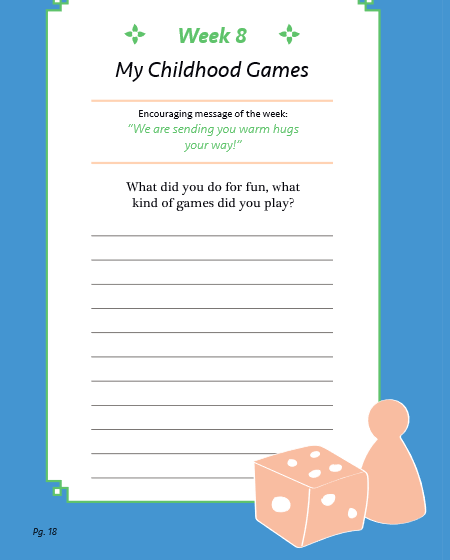
We also understood that it was possible for people to come in contact with the product as a gift without coming into contact with any customer touch-points such as a store, website or social media channels. It was therefore, necessary to look at ways we could evoke emotion through the product as well. This we did in two ways; we used abstract images that matched the theme of the task for the week such as a candle to represent activities that revolved around holidays or a dice for activities that revolved around games. At the beginning of each page was also a pick-me-up quote or message that was specifically chosen to match the themes.
In summary, as a team we learnt that creating emotional connections was a continuous process and one that was an external as well as an internal activity and that the key to this was ensuring that every decision taken about the product had to have emotional connection as the backdrop.
Leave a Reply