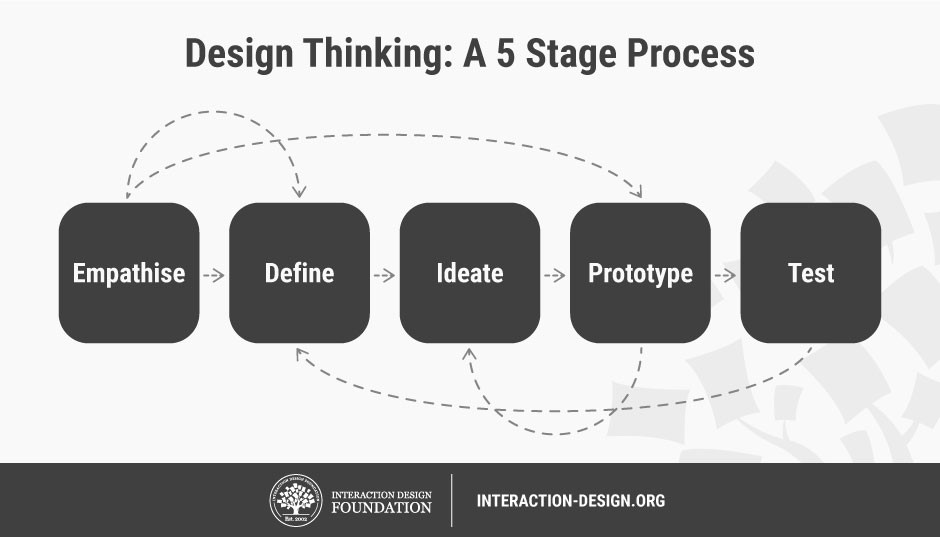
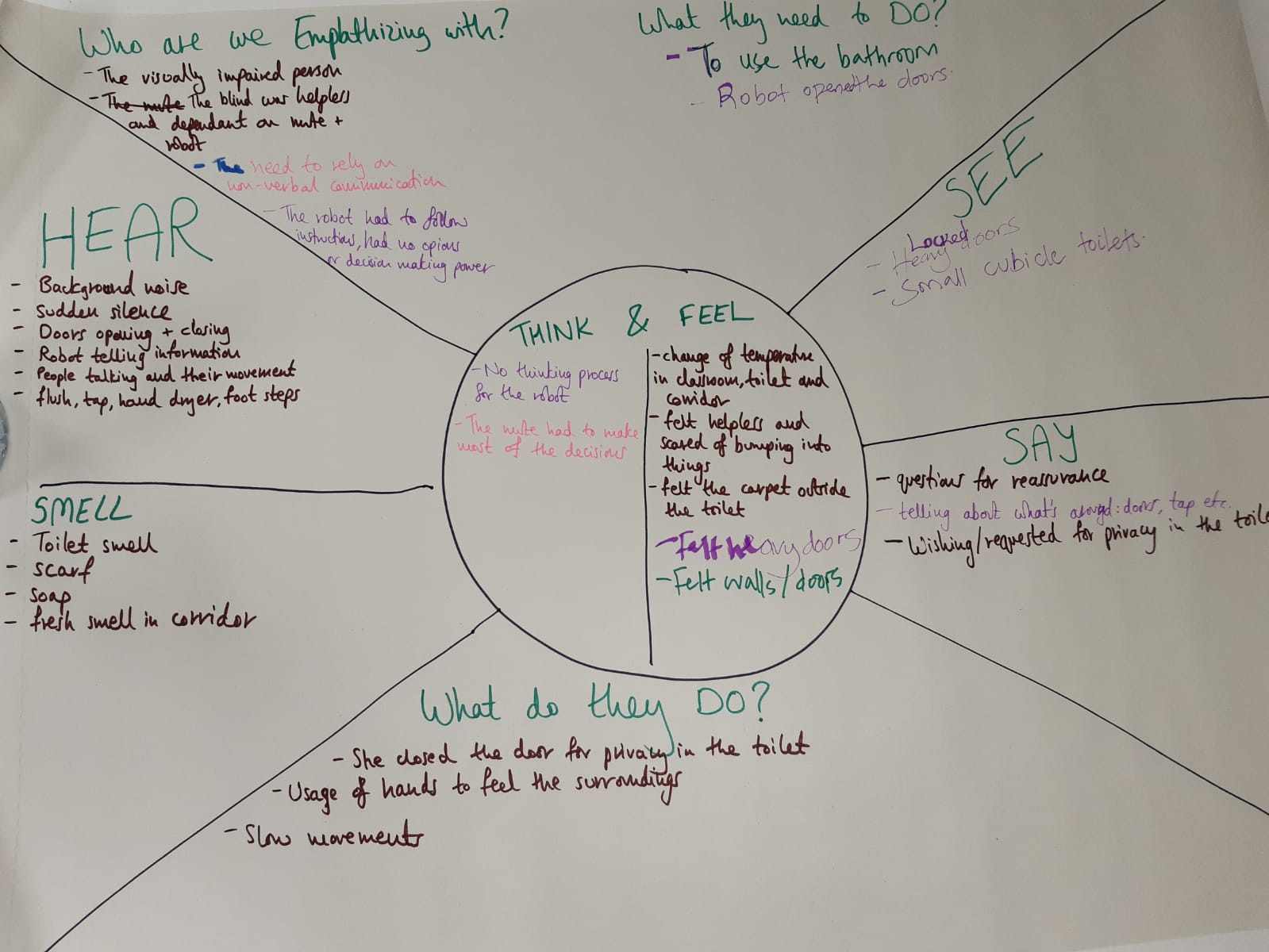
It was quite an insightful Design- Thinking class we had today where we focused on extreme users. I call it insightful because part of the exercise for today required immersing ourselves in a different world. We were grouped into teams of three where one person had to be a robot, the other a mute and the third person had to pretend to be visually impaired. Our task was to work together as a team to get the visually impaired person to use the toilet and make it back to class. At first, I thought to myself “this should be pretty straightforward right, it’s just a short walk after all” …I had no idea how wrong it was.
First challenge we had as a group was figuring out a mode of communication that worked best for everybody because that was quite essential to achieving the task. We found a way around that first challenge, but the part b of that hurdle was communicating on time to avoid accidents. You see as a robot, I could not think, feel or have an opinion, I could only carry out the commands by the person pretending to be visually impaired. If they did not give an instruction on time, or ask a question on time, we were going to walk straight into a wall or have some form of accident because the person pretending to be mute is unable to give a command.
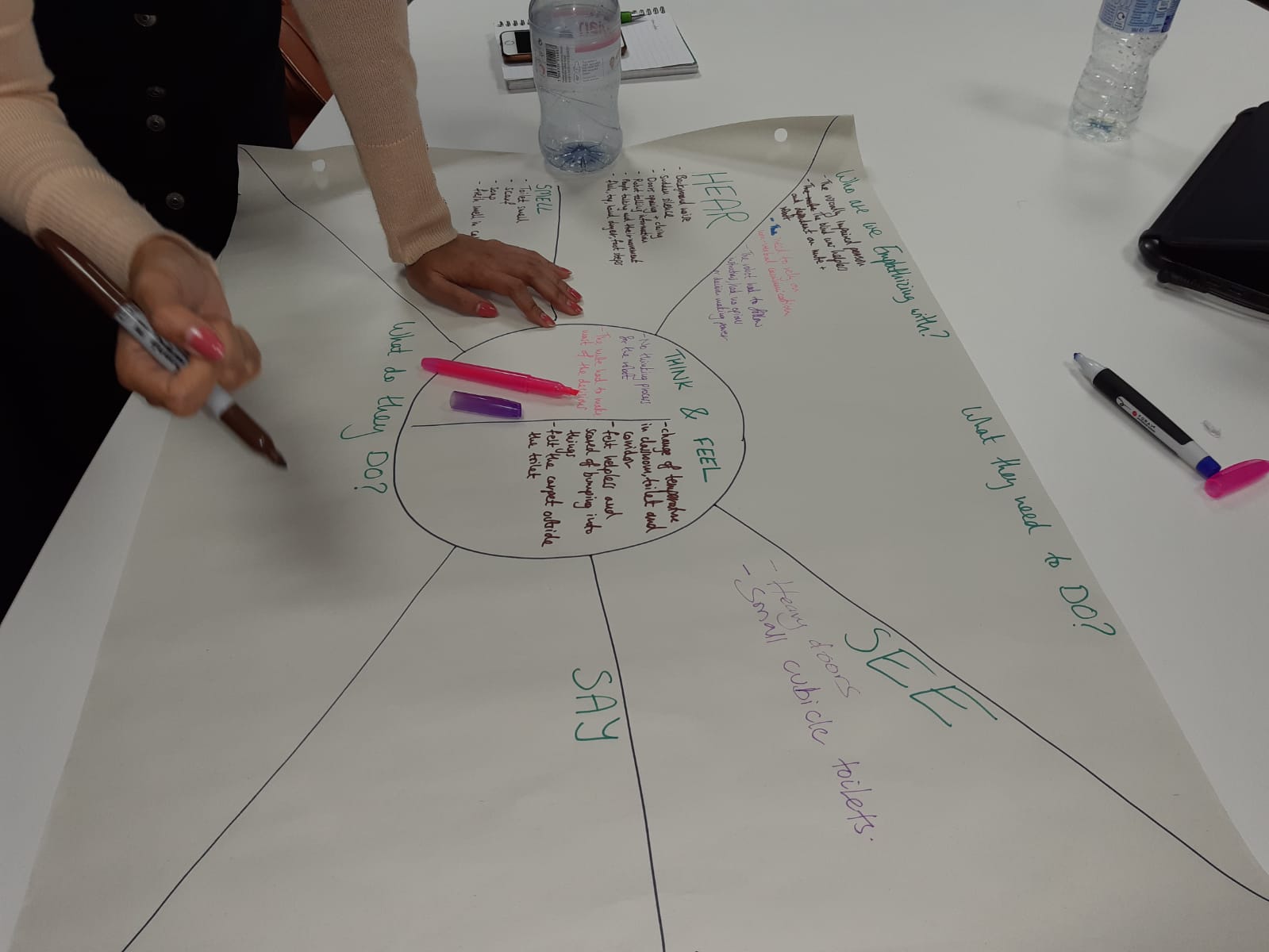
This was not a communication class but the task we were given did share some insights as to the role of communication in getting some form of insight from extreme users. When tasked with mapping out our experience on the empathy map originally designed by Dave Gray, I realized that all the points on the map had one thing in common, communication. What we could smell, feel, think, say or do all communicated something about that moment to us. For example, my team mate who was blind-folded said she felt the “air change and become cooler” when we went through a set of doors. That let her know that she was outside the classroom. The stretching out of her hands to find her way could mean she did not trust us enough to get her out of harm’s way despite our instructions and guidance and so she had to equally look out for herself.
This was a good way to learn that the role of communication in empathizing went beyond just asking the “why” and “how” questions; observing non-verbal ques might probably be the most important, as actions speak louder than words. Sometimes people are unable to communicate exactly why they do certain things they way they do them or how they actually do those things so physically observing and even carrying out the activity yourself may communicate a lot more to you about their feelings and experience than a verbal conversation will ever do.
This particular skill will most definitely come in handy when designing a trans-national service/product; especially when you take into consideration high context cultures where fewer words are used and low-context cultures where there is more variety in the choice of words to describe things.